Chaos Philosophorum: Using Chaos As A Tool For Transformation
Chaos is like the swirling storm before the calm—it disorients, unsettles, and yet, it also creates space for growth and clarity. Hermetic philosophy, especially in the context of spiritual alchemy, views chaos not as something to be feared or avoided. In face, it is a necessary condition for transformation. Chaos creates the space where old forms dissolve and new possibilities can emerge.
From an alchemical perspective, chaos is not mere disorder. It is the prima materia—the raw, unformed substance from which all creation arises. When we consciously engage with chaos, we enter a creative process that mirrors the structure of the universe itself. Rather than resisting it, we learn to work with chaos as a catalyst for clarity, renewal, and alignment.

Chaos Philosophorum: A Historical Lens
The term Chaos Philosophorum, Latin for “the Chaos of the Philosophers,” originates in medieval and Renaissance alchemy, not as a critique of philosophy, but as a technical term describing the starting point of the Great Work.
For alchemists such as Michael Maier, Heinrich Khunrath, and other Hermetic philosophers of the 15th–17th centuries, Chaos Philosophorum referred to the undifferentiated state of matter and consciousness before refinement begins. It is synonymous with:
Prima Materia
Philosophical Mercury
The “One Thing”
The womb of creation
This chaos is not random confusion. It is a fertile fullness, containing all opposites—light and dark, masculine and feminine, spirit and matter—before they are separated and purified. Only the philosopher (the initiate) can recognize and work with this state, which is why it is called the chaos of the philosophers, not the chaos of the uninitiated.
Historically, Chaos Philosophorum corresponds to the first stage of alchemy: Nigredo, the blackening. This is the phase of breakdown, dissolution, and return to origin. The alchemist deliberately reduces matter—and themselves—to chaos so that something true can be born.
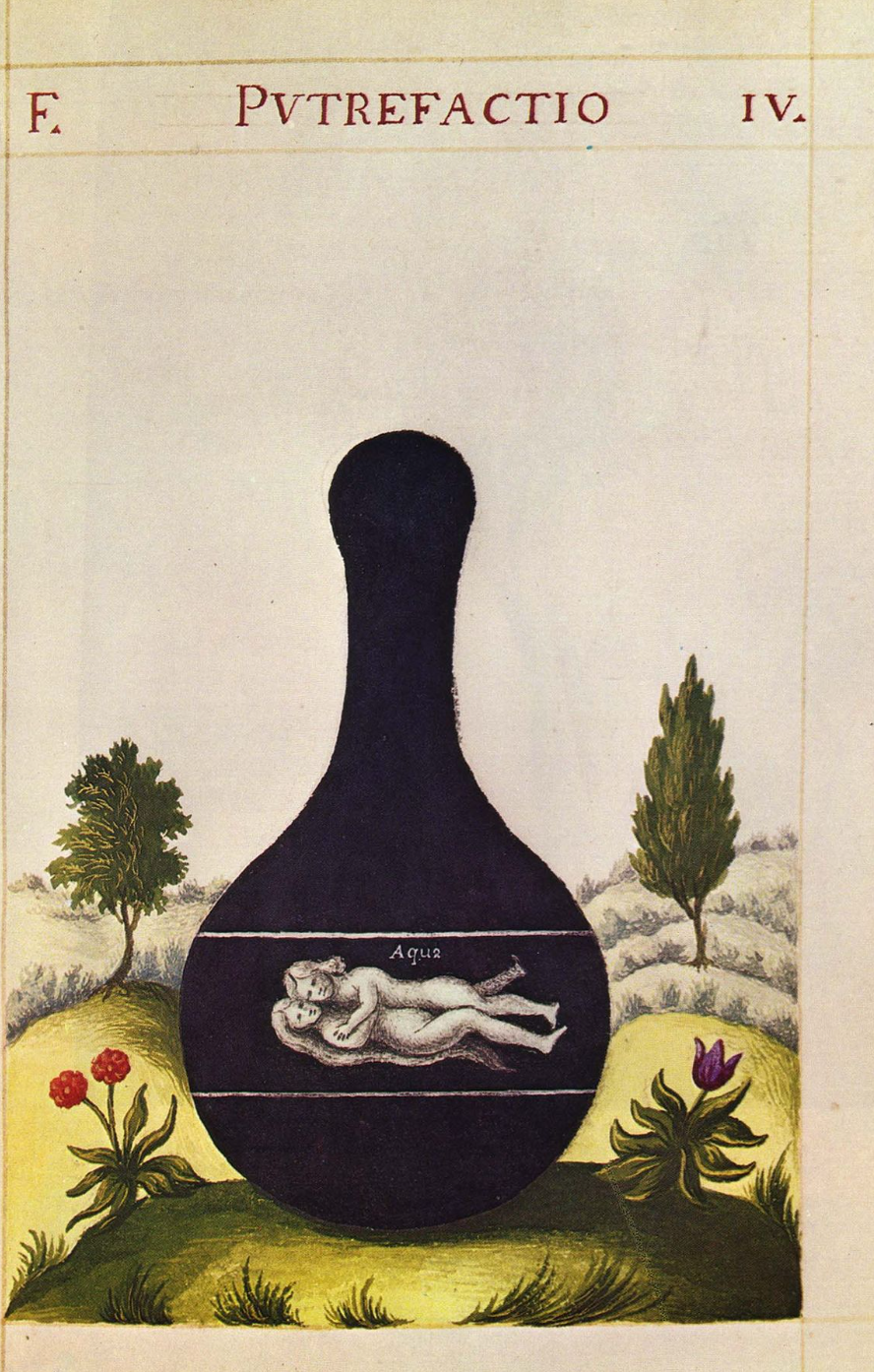
Putrefactio (Plate IV) — Michael Maier, from Atalanta Fugiens (1617)
Hand-colored engraving illustrating the alchemical stage of putrefaction (Nigredo), in which matter is sealed in darkness and dissolved back into its primordial state (Chaos Philosophorum) as the necessary precondition for regeneration and transformation.
Chaos as the Seed of Creation
Across ancient traditions, chaos is consistently portrayed as the origin and birthplace of creation, not its opposite. In Greek cosmology, Chaos is the primordial expanse from which all beings emerge. In Norse mythology, Ginnungagap is the fertile void where fire and ice meet, giving birth to the cosmos. In Biblical symbolism, creation begins from formlessness—“the earth was without form and void.”
These stories point to a universal truth: before form, there is formlessness; before clarity, there is dissolution; before structure, there is potential.
Chaos is not mere disorder. It represents infinite possibility, the raw material from which life, order, and renewal arise. These myths are not just ancient lore; they are metaphors for the cycles of human experience. When everything feels undefined or unsettled, it is often because something new is trying to take shape.
In modern life, chaos can look like sudden career changes, emotional ruptures, identity shifts, or moments where certainty collapses. While these experiences can feel overwhelming and even destabilizing, alchemically speaking, they signal that something essential is being stripped down to its core.
A career transition, for example, may initially feel destabilizing and threatening to your sense of identity and security. But in this space of uncertainty about your future, there can often be a new opening that invites deeper questions: What truly matters to me? What am I meant to build next?
Similarly, the end of a relationship may dismantle familiar patterns, creating space to heal, recalibrate, and choose more consciously how you move forward.
While chaos can feel like destruction, it is also profoundly creative. It pushes us to release what no longer serves—outdated beliefs, limiting patterns, or habits that hold us back. By clearing away the old, chaos makes room for something more aligned to emerge.
Chaos is not here to punish. When worked with consciously, it can initiate you into a completely new and aligned timeline. Lean into the formless moment, and allow it to guide you toward renewal, clarity, and the next expression of who you are becoming.
Hermetic Wisdom: The Order Within Chaos
In Hermeticism, chaos and order are not enemies; they are two ends of the same spectrum, opposites that are part of a unified whole. The universe operates through interconnected principles, one of which is the Principle of Polarity: everything has its opposite, and these opposites are intrinsically linked. What appears as chaos is not separate from order; it is simply order in an unformed, nascent state. By understanding this, we can shift our perspective on chaos from fear to curiosity, seeing it as a necessary precursor to growth and harmony.
What feels like disorder is simply order in its unformed state, waiting to be revealed. Chaos is the raw potential, and order is its manifestation. Just as night gives way to day and winter transitions into spring, chaos precedes the creation of something new. As the Hermetic axiom goes, “As above, so below; as within, so without”, reminding us that the patterns we see in the cosmos also exist within ourselves. The universe itself began in a state of chaos before forming stars, galaxies, and planets. Similarly, our personal chaos holds the seeds of order waiting to emerge.
In the Hermetic practice of alchemy, we are provided a clear blueprint for navigating chaos. Alchemy describes transformation as a series of stages, with the first being Nigredo, or blackening. This is the phase of decomposition and chaos, where the old must break down to make way for the new. While this stage can feel overwhelming, it is essential for growth. The alchemist doesn’t fear the chaos; they engage with it, knowing it is the first step in the Great Work—the process of turning base matter into gold.
In life, this might look like the upheaval of a career change, the dissolution of a relationship, or the breaking down of long-held beliefs. These moments, while painful, are fertile ground for clarity and renewal.
Practical Exercise: When you encounter chaos, view it as your prima materia, the raw material for transformation. Ask yourself:
What outdated beliefs or habits are breaking down in my life?
How can I actively participate in refining this raw material into something meaningful?
The Hidden Lessons of Chaos
Chaos often acts as a reflection of the contradictions within us. Just as philosophers throughout history grappled with paradoxes like free will versus determinism or reason versus emotion, we too encounter tensions in our lives that seem to pull us in opposing directions. We crave freedom yet yearn for stability. We seek deep connection but also need solitude. These contradictions are not evidence of failure or indecision—they are natural parts of the human experience, signaling areas ripe for exploration and growth.
Rather than viewing these tensions as problems to solve, we can approach them as invitations for deeper inquiry. Chaos gives us the opportunity to ask:
Why do I feel torn between these desires?
How can I honor both sides of this paradox in my life?
The answers often reveal unexpected truths, helping us integrate opposing forces into a more harmonious whole.
The Principle of Rhythm, one of Hermeticism’s core teachings, reminds us that life moves in cycles—rising and falling, expanding and contracting. Chaos is never as random as it appears. Beneath every moment of disorder lies a hidden order, a rhythm that is waiting to be discovered. The challenge is not to eliminate chaos but to discern its patterns and purpose.
Imagine a cluttered desk. At first glance, it may seem like an overwhelming mess. But as you begin to sift through it, you find that every item has a purpose—a bill that needs to be paid, a project that’s waiting for attention, a cherished photo that sparks joy. The same is true of the chaos in life. It may feel overwhelming, but within the apparent disorder are opportunities, lessons, and priorities waiting to be uncovered. Life’s chaos challenges us to discern what truly matters. It forces us to confront the noise and distraction and sift through the clutter of our thoughts, emotions, and experiences. This process is not about controlling or eliminating chaos; it’s about working with it to find meaning and alignment.
For example:
A chaotic work schedule might feel overwhelming, but it can reveal where your time and energy are being misaligned with your values.
A messy relationship dynamic might uncover unresolved patterns within yourself that need healing or boundaries that need strengthening.
The chaos of juggling multiple responsibilities might highlight the need to prioritize self-care and simplify your commitments.
This process of uncovering order within chaos is transformative. It requires us to slow down, observe, and engage with the mess instead of avoiding it. When approached with intention, chaos becomes a powerful teacher, helping us refine our focus and uncover what truly matters amidst the noise. We can not only bring clarity to the situation but also uncover the deeper purpose behind the disorder.
Practical Exercise: When life feels overwhelming, take a moment to journal or meditate. Look for recurring patterns in the chaos. What lessons or higher order might these patterns reveal? Shifting your perspective can help transform disorder into empowerment.
The Gift of Chaos
Chaos is not a problem to solve or a flaw to fix—it is a gift, a sacred teacher in disguise. It holds the potential to break apart the rigid structures that no longer serve us, creating space for something new to emerge. Just as the alchemist sees value in the raw, unrefined prima materia, we too can find immense possibilities within life’s disorder. Chaos challenges us to grow, urging us to release outdated beliefs, habits, and patterns so we can uncover the gold hidden within the mess.
The next time you feel overwhelmed by chaos—whether it’s a sudden career upheaval, an emotional crossroads, or the seemingly endless demands of modern life—pause and reframe the experience. Ask yourself:
What opportunity might this disorder be presenting?
What outdated structures or beliefs is it asking me to let go of?
What new possibilities could emerge from this moment of uncertainty?
By leaning into the experience with curiosity instead of resistance, you allow chaos to reveal its purpose. Much like the cluttered desk where hidden treasures come to light, or the storm that clears the air, chaos clears the path for clarity and renewal.
Embracing chaos is an act of alchemy. It is the Great Work of taking the raw, unrefined elements of our lives and transforming them into something valuable and aligned. This process requires courage and trust in the cycles of life. As Hermetic wisdom reminds us, chaos and order are not opposites—they are partners. Chaos is simply the beginning of a new cycle, a precursor to the order that will eventually emerge.
When we embrace this alchemical perspective, we realize that chaos is not random or meaningless. It is an essential part of creation, pushing us toward greater alignment with our true selves. Each moment of disorder is an opportunity to refine, recalibrate, and rebuild.
So when chaos comes knocking, lean into it. Allow its energy to move through you, clearing away what no longer fits and creating space for something extraordinary to emerge. By embracing chaos, you align yourself with the creative forces of the universe—and discover the beauty and power of your own transformation.